Building Capacity, Not Just Skills in Malaysia: Sector-Shaping Early Childhood Intervention Training in Sarawak
Discover how AITT partnered with OSEIC, PIBAKAT, and Yayasan Sime Darby to deliver sector-shaping Early Childhood Intervention training across Sarawak, building long-term workforce capability, shared frameworks, and culturally responsive practice.
Feb 2, 2026
Building Capacity, Not Just Skills: Sector-Shaping Early Childhood Intervention Training in Sarawak
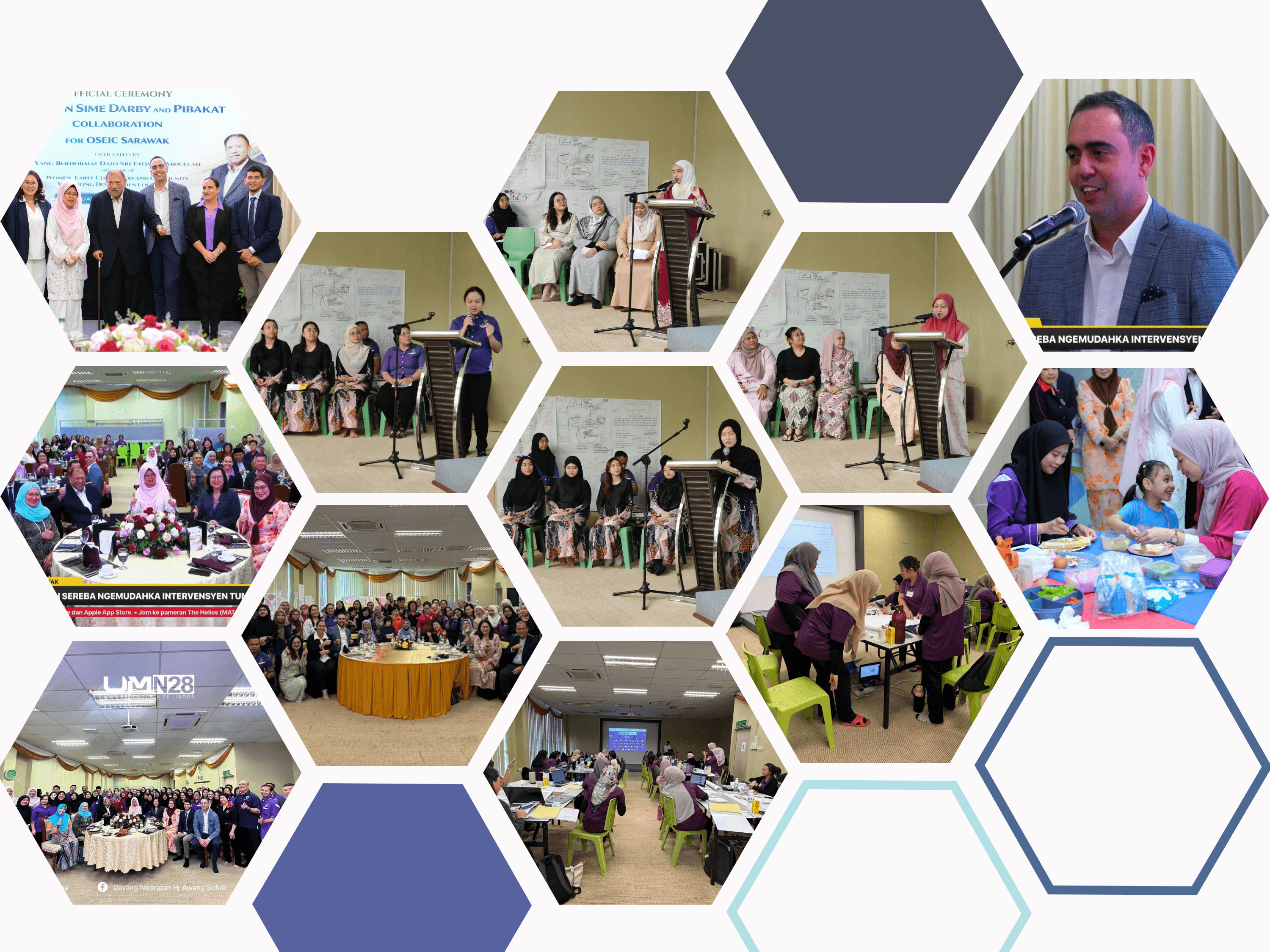
Over 15 intensive and highly collaborative days, 30 Early Childhood Intervention (ECI) Assistants from the One Stop Early Intervention Centre (OSEIC) and across Sarawak came together to take part in a program that went far beyond traditional training.
Hosted by PIBAKAT (The Sarawak Society for Parents of Children with Special Needs), and Yayasan Sime Darby, the program was designed and delivered by the Australian Institute of Technology Transfer (AITT) under the guidance of the Ministry of Women, Early Childhood, and Community Wellbeing Development (KPWK), led by Minister Yang Berhormat Dato' Seri Fatimah Abdullah.
This program was not designed as a short-term professional development course. Its purpose was far more ambitious:
To build the foundational capability, shared language, and practical frameworks that will shape Early Childhood Intervention practice across OSEIC’s expansion across Sarawak for years to come.
From Training to Transformation
At its core, this program was about capacity building, not just adult learning.
Rather than focusing solely on individual skill acquisition, participants worked collectively to:
Develop a shared Early Childhood Intervention (ECI) framework via a Capstone project to guide consistent, high-quality practice
Establish aligned practice across core ECI principles, with a strong emphasis on rights-based, family-centred, strengths-based, and diversity-affirming approaches
Strengthen professional judgement and reflective practice to support responsive decision-making in complex, real-world contexts
Create practical tools, resources, and implementation approaches that can be scaled and replicated across multiple centres
Contextualise ECI practice to reflect Sarawak’s cultural diversity, family structures, languages, and rural and remote service realities, recognising that culturally grounded and family-embedded intervention leads to stronger outcomes for children
This collective approach ensured the impact of the program extended well beyond the 30 participants in the room. The shared frameworks, practices, and professional mindsets developed through the program now form a foundational platform for ongoing collaboration, supporting the expansion of OSEIC initiatives across Sarawak and contributing to the long-term development of a Centre of Excellence in Early Childhood Intervention.
As the program is embedded and extended, it will continue to support more consistent, culturally responsive, and family-centred intervention outcomes for children and families across diverse communities throughout Sarawak.
A Multidisciplinary, World-Class Facilitation Team
To achieve this level of impact, AITT deliberately assembled a multidisciplinary facilitation team, recognising that true sector transformation requires more than a single lens or area of expertise.
The program vision was realised through the combined leadership of:
Early Childhood and Early Intervention Specialists: ensuring all practices were firmly grounded in evidence, child development theory, and family-centred principles - led by Kellie Hough, CEO of AITT Early Childhood College
Adult Learning Specialists: designing a learning experience that respected participants’ lived experience, cultural context, and professional roles - led by Hanif Kuthubutheen, Group CEO of AITT
Transformation, Management and Systems Specialists: supporting participants to move beyond isolated tasks and towards sustainable models, frameworks, and implementation pathways - led by Arian Mianigivi, Director at AITT
Local Cultural Experts: working closely with participants and the facilitation team to ensure all elements of the program were meaningfully contextualised to the diverse cultures of Sarawak - led by Janice Anak Drahman, AITT Consultant
This deliberate blend of expertise ensured the learning was deep, practical, culturally responsive, and immediately transferable, while remaining firmly focused on long-term system sustainability and future sector needs.
Learning That Was Built With the Sector
One of the defining features of the program was its collaborative, family-centred design. Participants were not passive recipients of content. Instead, they were:
Actively contributing their lived experience and local knowledge, including insights from family, cultural, and community contexts
Working in teams to solve real-world Early Childhood Intervention challenges, including those encountered in rural and diverse settings
Co-creating tools, maps, and resources that were culturally responsive, practical, and directly relevant to Sarawak’s context
Engaging in structured reflection and dialogue across roles, disciplines, and perspectives to strengthen shared understanding and professional judgement
This approach recognised participants not just as learners, but as co-designers of a future-focused, inclusive ECI system—one grounded in families, cultures, and everyday environments.
The result was a powerful shift from “being trained” to being empowered to shape consistent, high-quality intervention outcomes for children and families.
Capacity Building as the True Outcome
By the end of the face-to-face component of the program, participants had developed far more than technical competencies.
They left with:
Increased confidence in their professional role
A shared understanding of quality Early Intervention practice
The ability to embed intervention into everyday environments
Stronger collaboration across teams and disciplines
A sense of ownership over the direction of the sector
This is the essence of capacity building, enabling people and systems to continue improving long after the training concludes.
Partnership and Acknowledgement
AITT would like to formally acknowledge:
The Ministry of Women, Early Childhood, and Community Wellbeing Development (KPWK), led by Minister Yang Berhormat Dato' Seri Fatimah Abdullah and Deputy Minister Yang Berhormat Dato’ Hajjah Rosey Haji Yunus
OSEIC for its leadership, vision, and commitment to strengthening Early Childhood Intervention, led by General Manager Dato’ Dr Saadiah Binti Abdul Samat
PIBAKAT for supporting a program focused on long-term sector outcomes, led by President Tuan Haji Zaidi Bin Haji Ahmad
Yayasan Sime Darby for continuing to address critical challenges in education, environment, and community development, led by CEO Dr Hajjah Yatela Zainal Abidin, and Chairman Tunku Tan Sri Imran Ibni Almarhum Tuanku Ja'afar
Puan Nor Aisha Tan, AITT’s Sarawak Representative - for Corporate Guidance, essential leadership in stakeholder coordination and governance, supporting strategic alignment and sustained collaboration across government, sector, and AITT delivery partners.
This initiative reflects what is possible when government, sector leaders, and international expertise come together with a shared purpose: better outcomes for children and families.
Looking Ahead
This program marks an important milestone, not an endpoint. AITT will continue as a trusted partner and consultant in the months ahead, supporting the translation of learning into sustained system impact. The frameworks, capabilities, and professional confidence developed through the program will underpin:
Ongoing workforce development through further training, mentoring, and capability-building pathways
Consistent, high-quality practice across existing and future centres, guided by shared principles and evidence-informed frameworks
Stronger, more authentic collaboration with families and communities, recognising culture, lived experience, and everyday environments as central to effective intervention
A scalable and transferable model to support the rollout of additional centres and the establishment of a Centre of Excellence for Early Childhood Intervention across Sarawak
For AITT, this work reinforces our commitment to delivering world-class adult learning, consulting, and capacity-building solutions that strengthen systems, empower professionals, and deliver meaningful, long-term outcomes for children, families, and communities - not just certificates.
Stay Connected with AITT Insights
Subscribe to our Newsletter Now!
Get the Latest Training & Sector Updates
Receive sector updates, industry insights, and training opportunities directly to your inbox.
Stay Connected with AITT Insights
Subscribe to our Newsletter Now!
Get the Latest Training & Sector Updates
Receive sector updates, industry insights, and training opportunities directly to your inbox.
Stay Connected with AITT Insights
Subscribe to our Newsletter Now!
Get the Latest Training & Sector Updates
Receive sector updates, industry insights, and training opportunities directly to your inbox.